Gigapan Experiments

This afternoon I started work on a future episode of All About the Gear on which I’ll review the Gigapan EPIC Pro. Here’s my second attempt at a Gigapan image of the Golden Gate Bridge. Expand to full screen, zoom into it and pan. Check it out. (Sorry it’s Flash, but that’s how the Gigapan viewer works.)

http://www.gigapan.com/gigapans/0c555d389b119fa2efea2ad3a943119c/options/nosnapshots,hidetitle,fullscreen/iframe/flash.html?height=400

32 images in a 4×8 grid. Shot with a Nikon D800E at ISO 100. 70-200mm f/2.8. 1/400 second, f/8, 200mm. Stitched in the Gigapan Stitch app. The limitation to the resolution here isn’t the 36MP camera, the lens or the application. It’s due to atmospheric aberration. A problem with long-distance shots at 6pm on a warm September day.

Sony RX1R — Visions of Cameras Future?

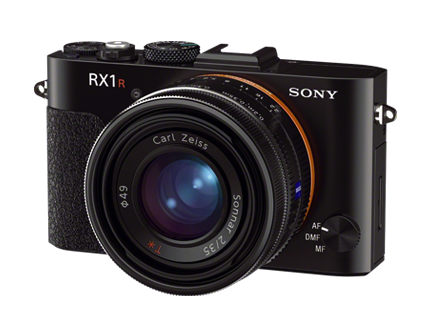
SonyRX1R

I’ve been shooting with the Sony RX1R for the past week as research for the next episode of All About the Gear. It’s certainly not perfect, but there are aspects of this camera that make it quite extraordinary. And now the word on the street is that the RX1R will be the basis for a full-frame Sony NEX body (ie, interchangeable e-mount) within the next month or two. If so, it will likely be the best (overall) interchangeable-lens full-frame-camera. Sorry Leica users, but it could be true.

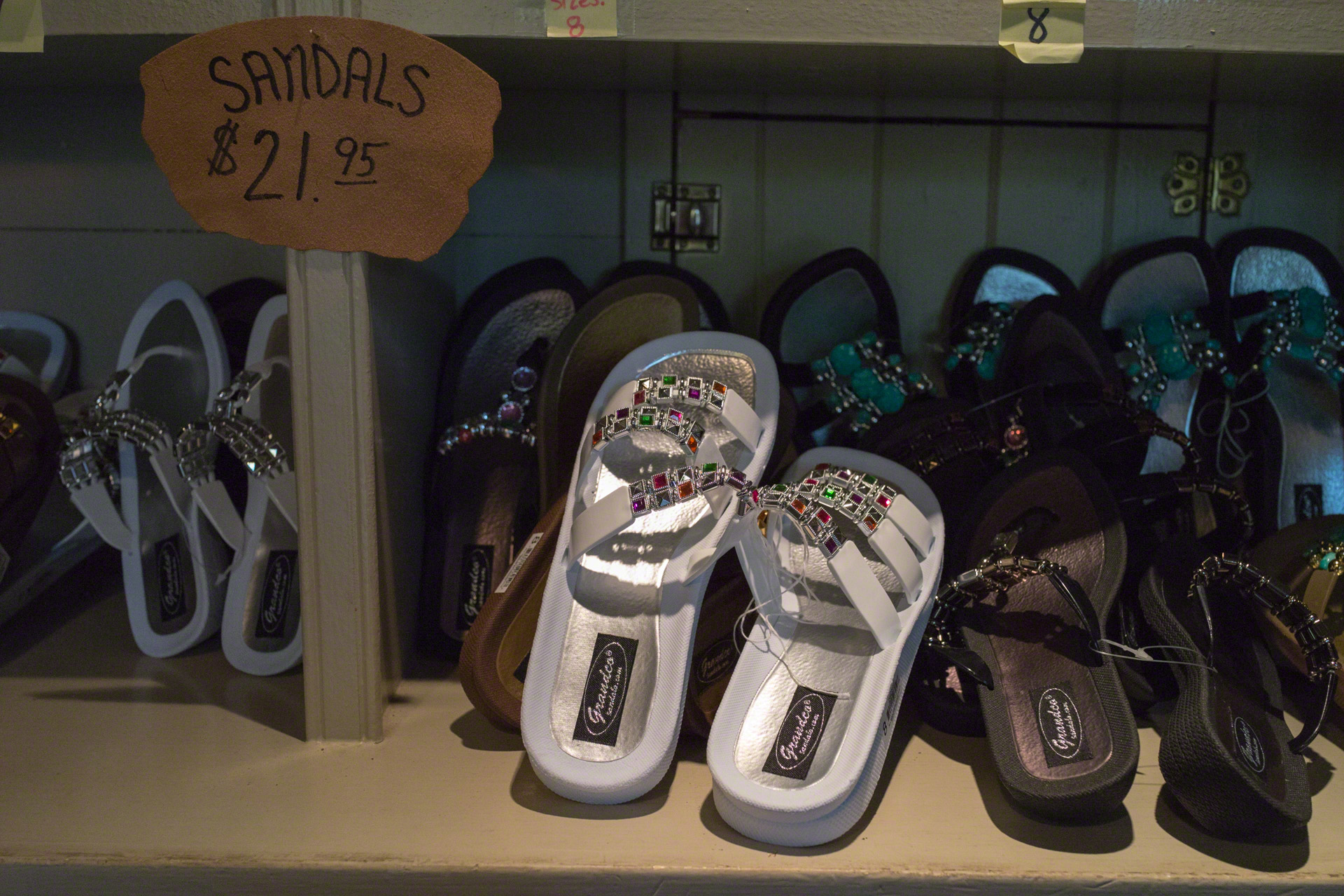
Here’s an example. This 24MP image was shot at ISO 8000 (not 800!), f/5.6, 1/320 second. It’s pretty much straight out of the camera. (It has a permanently affixed Zeiss 35mm f/2 lens.) This image is scaled in your browser to 600×400 from a 1920×1280 JPEG, which in turn was made from the original 6000×4000 pixel RAW file. In other words, what you see below is 0.24MP or a 1/10 (linear) scale of the full-size image. There are 100x more pixels in the RAW file than what you see here. Click (maybe twice) to see the 1920×1280 version.

_DSC0180

Now take a look at three full-scale 100% crops from the above image.

_DSC0180.jewels

The image above shows the detail of an area with a lot of specular highlights. Much of it is beyond the depth-of-field limits, so don’t judge it for sharpness.

_DSC0180.heels

This one, above, shows the level of detail in a non-highlight area. Two things of note: First, there aren’t any moire problems due to the lack of an anti-aliasing filter on the RX1R’s sensor. I haven’t been able to create any moire patterns except when I worked very hard to do so.

Second, check out the noise in the shadows. Yes, it’s ISO 8000 so there’s some noise, but notice how natural it appears. It almost looks like film grain, and there’s certainly none of that annoying colorful “confetti” grain.

_DSC0180.shadows


Finally, the image above is from a very dark area of the original. Again, look how unobjectionable the noise is.

I plan to shoot at even higher ISOs, but so far I’d say that this sensor/lens combination looks as good to me as any lens on my Nikon D800E.

Sony NEX-6 Update

NEX6LB_3

A month ago I blogged about taking the Sony NEX-6 and four lenses on a trip to Turkey. At that time there were two unresolved issues. Here’s how they worked out.

LCD Shutoff: While in Turkey, this problem became progressively worse. I often used the rear LCD tipped up 90 degrees. This allowed me to shoot from very low without having to get down onto my knees. But as the camera warmed up, particularly with the LCD set to ‘Bright’ for exterior use, I found it would shut off whenever I tipped the camera up from horizontal. If I tipped the camera down to or beyond horizontal, it worked fine. I emailed B&H from Turkey who write back, “No problem,” and as soon as I returned home, I sent it to them in exchange for a new one.

Fast forward a few weeks. The replacement NEX-6 arrives and…it has the same problem. Not only that, but so does my NEX-7!! What’s going on? A design defect?

So here’s the embarrassing truth. It was user error all along. There’s a sensor on the rear of the camera that switches between the LCD and the electronic viewfinder (EVF) when you put your eye to the EVF. I was holding the camera up against my own (too large) body, and when I tipped the camera up just slightly, the camera said to itself, “Oh, there’s a very large mass close to the EVF. I’ll switch over to that mode.” Yup, it had nothing to do with brightness, heat, attitude, etc. All I’ve had to do to solve the problem is to hold the camera two inches away from my body, and everything works fine. Oops.

18-200mm Autofocus: Immediately before the trip I bought the SEL18200LE superzoom, one of the four lenses I took on the trip. One reason I took the NEX-6 instead of the -7 is that the NEX-6 has superior phase-detection autofocus. That is, so long as the lenses support it and have been upgraded with the latest firmware.

I was able to update the firmware in my other lenses myself, but for some reason Sony requires that you send your (brand new) 18-200mm zoom back to them for this upgrade, and it takes two weeks. Since I was about to leave on the trip, I decided to wait until I got back and to suffer with the inferior autofocus when using this lens.

Now the superzoom is back, so how much difference is there? Not as much as I’d hoped. The time it takes for the lens to rack from far out-of-focus to in-focus isn’t any less. It’s still slow. At 200mm, for example, it takes a full four seconds to focus from one extreme to the other, essentially the same as before the upgrade.

[Sidebar: I have to admit that I’m horribly spoiled by the ultra-fast autofocus on my big Nikons. Using the D3s, the equivalent 28-300mm zoom at 300mm focuses from one extreme to the other in about one second. The 85mm f/1.8 does this in about 1/2 second, and the killer 70-200mm at 200mm can rack from one extreme to the other in about 1/4 second. But, of course, the battery alone in the D3s weighs almost as much as the body of the NEX-6.]

There is one improvement, however. Because of the addition of the phase-detection autofocus sensor, the lens doesn’t have to “hunt” nearly as much when it focuses. It still takes a long time to go from one extreme to the other, but once it gets to the right focus it stops there fairly quickly. And if it starts fairly close to in-focus, it does a better job than previously. Before the firmware upgrade, it would overshoot, then correct and maybe correct again while it used only contrast to determine what’s in focus. The phase-detection sensors allow the camera to predict the in-focus point and therefore minimize the overshoot. It’s still not as good in this regard as the big Nikons. The NEX-6 still scratches its head a bit, whereas the D3s virtually jumps to the perfect focus.

[Note: In addition to the lens firmware, which must show as version 02, the NEX-6 body itself must be updated to version 1.01 or later. Luckily, you can do this yourself.]

All in all, I’m now happy with the NEX-6. I’ll probably sell the NEX-7 to fund something new. I prefer the controls on the NEX-6 — I’m tired of inadvertently changing things on the -7 — and who really needs 24MP for casual use? 16MP in the NEX-6 plus the better autofocus make it my favorite in this family.
Prime or Zoom?

In a comment to my previous post, Dan Dawson asked, “I’d be curious, of the shots taken with the primes, what apertures were used in the shots you kept… were they wide open at f/1.8 or did they wander up in to the range that your zooms could have handled?” Good question. Here are those data:

Screen Shot 2013-06-29 at 4.56.23 AM


The chart shows the distribution of images I shot with a Zeiss 24mm f/1.8 using a Sony NEX-6 on a recent trip to Turkey. These are the images I actually published — 16 out of 907 taken with that lens. The chart also highlights (via a horizontal red line) images that could have been shot with the 18-200mm f/3.5-6.3 superzoom, which opens to f/4 at 24mm.

Admittedly, the sample is a bit small. I did the same for the 50mm f/1.8 and the numbers were even smaller and therefore less conclusive.

Which Lenses Did I Actually Use?

Two days ago I posted a lengthy article about the photo gear I took to Turkey. But I was still curious which lens(es) I might have been able to do without if I had to do it all over again. To be objective I logged the EXIF data to see the focal lengths of the first 94 images I published from the trip (out of 4,200 taken). They’re a good sample and generally the best of what I shot. Below is a chart showing the results.

Screen Shot 2013-06-28 at 2.41.01 PM

This is a histogram/scatter chart. (Thanks to Ian Leslie for his suggestion of a better way to display these data.) Click to enlarge it. The vertical scale is focal length (logarithmic). The bottom is 10mm and the top is 200mm. There’s no horizontal scale, just 94 horizontal positions, one for each photograph. So just consider the height of the blue diamonds and how they cluster. I added two horizontal red lines to highlight the two prime lenses: 24mm and 50mm. And on the right side there are two vertical lines showing the ranges of the two zooms.

I used four lenses, the ranges of which are shown above in red:

  • 24mm f/1.8
  • 50mm f/1.8
  • 10-18mm f/4
  • 18-200mm f/3.5-6.3

So what conclusions can I draw? As I expected, the 24mm was more valuable than the 50mm. But if I hadn’t had the 10-18mm or the 18-200mm, there are a lot of shots that wouldn’t have been captured, at least not the same way. From this chart, I don’t see anything that would convince me to change the lenses for the next trip, but it was an interesting experiment nonetheless.

Free Photoshop Actions: 1/4- and 3/4-Tone Masks

Inspired by the great work of Tony Kuyper and Mark Lindsay plus the video tutorials by Sean Bagshaw, I’ve just posted this 14-minute tutorial on how to use my new free Photoshop actions to enhance the 1/4- and 3/4-tone portions of your images.

Download the free Photoshop Actions. (My Photoshop Actions for 1/4- and 3/4-tone masks are not compatible with current versions of Photoshop. Beside, the latest version of Tony Kuyper’s TKActions Panel includes a superior tool for generating these masks.)

How Does Sensor Size Affect Depth-of-Field?

Earlier today, Frederick Van Johnson and I recorded a pilot for a new series from This Week in Photo. The series is tentatively called All About the Gear and the pilot episode is The Olympus OM-D vs Sony NEX 7 – Is Mirrorless More, or Less?

https://www.youtube.com/watch?feature=player_embedded&v=gUYVVdefrbI

In the show I made the statement (at about the 8:00 mark) to the effect that the depth-of-field on a micro four-thirds (MFT) camera at a given aperture (say f/4) would be the equivalent of f/8 on a crop-sensor camera like the Sony NEX-7. What I should have said was that it would have been the equivalent of f/8 on a full-frame (FF) body. That’s what happens when you try to talk faster than your brain can operate.

In any case, in the YouTube comments, Jamie MacDonald challenged that statement, saying “f/1.8 is f/1.8 It is ‘sensor agnostic’ if you will.” Jamie is technically correct and I was taking a shortcut for the benefit of simplicity, for which I apologize. However this continues to be a much misunderstood issue, which I think deserves a more complete explanation.

Imagine you’re taking a picture of a tree with two cameras, both equipped with zoom lenses, from the same location. One is an MFT and the other is FF. Let’s assume both are set to an aperture of f/4. You compose your shot on the MFT camera and it turns out to  require a focal length of 45mm. Now you compose the exact same shot on the FF camera. The tree is the same size (in terms of percentage of frame height) in both viewfinders. If you check the focal length on the FF camera, you’ll see it’s set to about 90mm. Same shot. Same aperture. Different focal lengths.

Now go home and look at both images. You’ll see that the image from the MFT camera has a much greater depth-of-field, while the one from the FF has much more boken, or blurring as you get away from the in-focus area of the image. Why, because of the difference in real focal length as opposed to equivalent focal length. (We say that 45mm on the MFT camera is the full-frame equivalent of 90mm because of the size of object in the frame from the same distance.)

As Jamie correctly points out, this is not actually due to the aperture, since it’s the same in both cases. But here’s the thing: If instead of shooting the FF image at f/4, you use f/8, now you would find the depth-of-field in the resulting images was nearly identical.

The superzoom on my big Nikons is 28-300mm. An equivalent superzoom on an MFT camera is 14-150mm. Those lens/camera combinations give me the same image-area range. I most-often shoot in aperture-priority mode, so with my FF camera I might decide to use f/11 to give me the desired depth-of-field for a particular shot. In order to get the same depth-of-field using the MFT camera, I need to set it to f/5.6.

So what does this mean in practice? When using lenses of equivalent focal lengths such as the kit zooms on each, to get the same depth-of-field as a full-frame camera, you need to use an aperture about two stops wider on an MFT camera and about one stop wider on an APS-C crop-sensor camera.

Hope that helps.

And please: give us feedback on the new show. Here, on the TWiP blog or on the YouTube channel.

Sony NEX: The Lenses

In the first part of my review I compared the bodies of the Sony NEX-6 and NEX-7. As I mentioned then, my motivation for these reviews is to find the best way to “travel light” for a non-photographer’s trip to Turkey in June. I already own an NEX-7 with two lenses, but I wanted to (a) check out the NEX-6, and (b) find the best suite of lenses for this non-assignment. This post is all about the lenses.

Here are the six lenses I’ve used for the past four days and my comments on each:

  • 18-55mm f/3.5-5.6. It’s a good-enough general-purpose lens, which I purchased as the kit lens for my NEX-7. Not particularly sharp and certainly slow, but it’s helped me get some decent shots over the past year.
  • 16-50mm f/3.5-5.6. This is the newer kit lens for the less-expensive NEX bodies, and it’s weird. I wasn’t impressed. It’s a pancake-style zoom and takes about two seconds to expand after the camera is switched on. Seems like forever. It also has a fly-by-wire “power” zoom control, which is great for smooth zooms in video but it has an annoying lag for still images. If you’re buying an NEX camera, I suggest you not buy this lens with it unless you try it out first.
  • 50mm f/1.8. I’ve owned this lens for the better part of a year. Even though it overlaps the 18-55mm in focal length, it’s sharper and faster than the kit lens. I pop it on when I need to grab more light (3 stops faster than the zoom), want the shallower depth of field or have time to take a more-careful shot that would benefit from a sharper lens.
  • 16mm f/2.8. An inexpensive prime, but disappointing, particularly when compared to the alternatives. The interesting thing about this lens is that you can buy two adaptors for it. One converts it into an even wider-angle lens (about a 12mm) and the other gives you a fisheye. I didn’t test with either of these adaptors, but I may do so in the next month or so.
  • 24mm f/2.8 (Zeiss). By all others’ accounts this is the killer lens for the NEX E-mount cameras. Now that I’ve tried it, I agree. Expensive ($1,100) but gorgeous. Sharp, high-contrast, minimal chromatic aberration. At a 36mm full-frame equivalency, this is a terrific lens for both general and high-res use.
  • 10-18mm f/4. This one is my new discovery. I’ve started shooting more with wide and ultra-wide lenses and this really fits that niche. At a full-frame equivalence of 15mm-27mm, it’s reminiscent of my Nikon 14-24mm f.2.8. Well, not nearly as spectacular, but the 10-18mm does a pretty good job considering its size. Still, it’s a bit larger and more expensive ($850) than most other lenses listed here. But I do like it.

Two lenses (the 16-50mm and the 16mm) didn’t make the cut. Here’s the plan for what I’ll be taking to Turkey, at least as of now:

  • 18-55mm f/3.5-5.6
  • 10-18mm f/4 (rented)
  • 24mm f/1.8 Zeiss (rented)
  • 50mm f/1.8

Here’s my logic. The 18-55mm is fine as a walkaround casual lens when I’m outdoors in the daytime and not in my serious-photographer role.  The wide-angle 10-18mm zoom is a perfect compliment to the kit lens with the crossover between them at 18mm (27mm full-frame equivalent). But when I move indoors, need more light and don’t want to crank up the ISO, or when I simply want to spend more time on a subject, I find I switch to the 50mm or the Zeiss 24mm primes.

The only lens I’m missing in this set is something telephoto. The 18-200mm superzooms (11x) are just too large to meet my “travel light” criterion. But with a 24MP sensor on the NEX-7 I always have the option of cropping. If I shoot at 55mm and crop 2:1, it’s the same as though I had used a 110mm lens, which is the equivalent of 165mm on a full-frame camera. And I still end up with a 6MP image, which is fine for posting online and prints up to 8×10.

If you’re thinking of buying one of these bodies or lenses (or any others for that matter) I strongly recommend renting first. Personally, I use BorrowLenses.com, but LensRentals.com and even your local camera shop are good, too. For example, the two lenses I’m taking to Turkey that I don’t already own would cost me about $2,000 total to purchase. To rent the pair for four weeks will cost me only about $225.

There are always surprises with gear. There’s always something the reviews didn’t tell you or you just missed. Rent for a 3-day weekend and it won’t cost you much. I think you’ll be glad you did.

Sony NEX-6 or NEX-7?

[Spoiler alert: If I had to buy today, I’d go for the NEX-6 over the NEX-7. (Yeah, I know: I’m in the minority on this one.) But if you can wait two months, the rumors are that there will be an update to the NEX-7 that will hopefully tip the scales in that direction.]

I’ve been shooting with a Sony NEX-7 on and off for nearly a year, alongside my big Nikons. (See my earlier NEX-7 review.) Although I think of the Nikons as my serious cameras, the fact is that when I looked back at the end of 2012, many of my best images were captured with the NEX-7.

When I leave home for a shoot (even a photowalk) I tend to take at least one body and far more lenses than any reasonable person would be willing to lug around. For a recent trip to Death Valley, I even brought along two tripods. (How dumb is that?) But my wife and I are taking a non-photographer’s trip to Turkey in June, and I’ve decided I want to try traveling really light. As frightening as that sounds — and it does, to me! — it means leaving the Nikon bodies and glass at home. I’m already losing sleep over this. It’s not about the gear. It’s not about the gear…

Since buying the NEX-7, I’ve often wondered if I might have been better off with a micro four-thirds camera. So many friends love them. So I got my hands on an Olympus OM-D E-M5 for a review. Bottom line: Although I made the mistake of testing the OM-D with inferior lenses, I certainly didn’t like the camera any more than I like the NEX-7. The one advantage of the OM-D was the array of superior lenses (which I didn’t test!) for the micro four-thirds system. Sony has been properly criticized for a lack of good ones.

But in the past year Sony has released new lenses. I’d also read positive reviews of the newer NEX-6 and was curious how it stacked up to the -7. And that’s the genesis of this review. I wanted to check out the -6 and some better lenses, ultimately to decide what to take to Turkey. I’ll cover the bodies in this review and save the lenses for a separate post.

Take a look at the DxOMark comparison of the two cameras’ sensors. They’re about as close as they could be, and that confirms my subjective experience. Although the NEX-7 is 24MP and the NEX-6 is only (!) 18MP, they’re both excellent. If anything, 24MP is a bit much for casual photography, particularly if, like me, you always shoot in RAW mode. (I know that five years from now that will sound ridiculous.) If image quality isn’t enough to differentiate these two bodies, what is?

The advantages of the NEX-6 are:

  • A dedicated Mode dial. This is personal preference, and I like this traditional approach. I do tend to change modes fairly often, so this works for me. Because the menu system on both these cameras is simply awful, the big issue is whether I can avoid the menus as much as possible. The NEX-6 allows me to change the important stuff without taking my eye away from the viewfinder: mode, aperture and/or shutter speed, ISO and exposure compensation. The NEX-7 just gives me two different ways to change exposure compensation by adding an extra control.
  • Quick Navi menu. Available by pressing the Fn button, this bypasses that awful menu system to get you to the most-frequently needed functions. Plus, you can change (up to a point) which functions appear here.
  • Less vulnerable controls. For some reason, I move the NEX-7’s controls accidentally more than I do on the NEX-6. I can’t explain why.
  • Superior autofocus. The NEX-6 (and hopefully the replacement for the NEX-7) adds a 99-point phase-detect autofocus array and it really works. This gives the camera faster and more accurate autofocus. If you’re a video shooter — I’m not — this will be important to you since the phase-detect autofocus is even working in video mode, unlike a DSLR. Note that phase-detection autofocus only works on lenses that can support it and in some cases you need to update the firmware in both the body and the lens. In my tests, it worked on the 10-18mm, 18-55mm, 16-50mm, 50mm and 24mm, but not with the 16mm f/1.8.
  • Standard hot-flash shoe. The NEX-7 has one that’s proprietary to Sony. (When will they ever learn?)
  • WiFi. You can use WiFi to copy images to a computer or mobile device or to upload them to Facebook, but it’s a pain to do so.
  • Downloadable apps. Available from Sony’s online store, the apps are free or cost $4.99. It looks like a few of them could be useful, but I didn’t test them.
  • Lighter by 20%.
  • Cheaper by $250 at today’s street prices.

So what’s so good about the NEX-7?

  • Larger, better sensor (but not by much).
  • Tri-Nav controls. Two soft/configurable controls on top versus only one on the -6. As I wrote above, pure personal preference.
  • Battery Life. Probably because of the NEX-6’s WiFi and perhaps the phase-detect autofocus, the NEX-7 battery life is a bit better, rated at 430 shots versus 360 shots for the -6.
  • External mic jack for video shooters.
  • 3D photos for display on your 3D TV. We all have 3D TVs, right?
  • Very slightly smaller, even though it’s somewhat heavier.

As I think you can see, my feelings are that the NEX-6 is, overall, a better camera with the most important differences being the controls and the improved autofocus. I’m not switching from the NEX-7 now, but if Sony combines the best of both in an updated -7, I’ll probably bite.

Here’s Part 2: Sony NEX: The Lenses